
Built for Years of Outdoor Living
Professional deck construction designed for your Weaverville and Fairview, NC, home and the way you use your outdoor space.
When you decide to add a deck to your Weaverville and Fairview, NC, property, you're creating usable outdoor space that connects your home to your yard. In Weaverville, where elevation and seasonal weather shifts affect how wood and composite materials settle, the construction process needs to account for drainage, frost line depth, and the weight distribution of joists and beams. You see the results in how level the surface stays and how securely the railings feel under pressure.
Sexton Deck Builders handles the full scope of deck construction, from footing installation and framing to decking application and railing assembly. You choose between pressure-treated lumber, cedar, or composite decking based on maintenance preference and budget. The crew digs post holes below frost line, pours concrete footings, sets support posts, and installs the ledger board that connects the structure to your home. After the frame is squared and inspected, decking boards are fastened with hidden clips or screws, and railings are attached to code height. The finished deck provides a flat, stable surface that supports furniture, grills, and foot traffic without flexing or bouncing.
Reach out to discuss your deck project and schedule a consultation in Weaverville and Fairview, NC.
How the Structure Goes Together
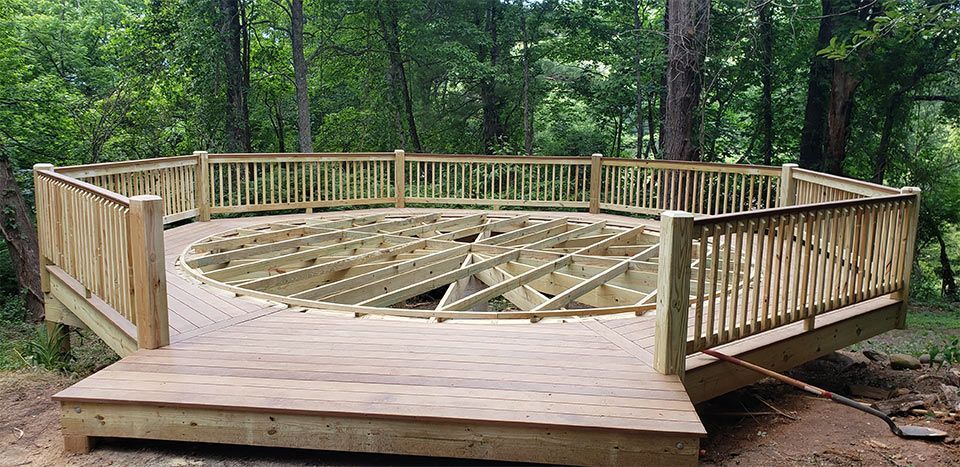
The build starts with site evaluation and layout in Weaverville and Fairview, NC, where the crew marks post locations, checks for underground utilities, and confirms setback distances. Footings are poured and cured before posts are set, then beams and joists are installed on metal hangers or notched connections. Decking runs perpendicular to the joists, and gaps between boards allow for water runoff and material expansion.
After installation, you walk onto a surface that feels solid underfoot, with no soft spots or sagging between supports. Railings are firm when you lean against them, and stairs descend at a consistent rise and run. The deck remains level across its span, and water drains off the surface instead of pooling in low areas.
Composite decking requires less annual maintenance than wood but costs more upfront, while treated lumber needs periodic sealing to prevent splitting and UV damage. The build timeline depends on deck size, ground conditions, and whether you add stairs, multiple levels, or built-in bench seating. Permits are pulled before work begins, and inspections are scheduled during the framing and ledger attachment phases to meet local building codes.
Questions That Come Up Before Starting
Homeowners typically want to know about material longevity, code requirements, and how the deck will hold up under regular use before moving forward with construction.
Sexton Deck Builders works with homeowners in Weaverville and Fairview, NC, to plan deck layouts that fit the property and meet code requirements for railings, stairs, and structural support. Contact us to review your site and discuss material options.